

When Apple first introduced Siri back in 2011, few marketers could have predicted how profoundly voice technology would transform the way people discover products, services and information. Fast forward to today, and voice search has evolved from a novelty into a fundamental shift in consumer behaviour—one that’s quietly but decisively reshaping digital marketing campaigns across every industry.
The statistics paint a compelling picture. According to recent research, 27% of the global online population now uses voice search on mobile devices, whilst comScore predicted that 50% of all searches would be voice-based by 2025. In the UK alone, voice commerce is expected to reach £3.5 billion this year. Yet despite these remarkable figures, many businesses have been surprisingly slow to adapt their digital marketing strategies to accommodate this conversational revolution.
Voice search isn’t simply another channel to add to your marketing mix—it’s fundamentally changing how people phrase their queries, what they expect from search results, and ultimately, how they interact with brands online. Understanding this shift has become essential for anyone serious about maintaining visibility in an increasingly voice-first world.
What Exactly Is Voice Search Marketing?
Voice search marketing refers to the practice of optimising your digital presence to capture traffic and conversions from voice-activated searches. Unlike traditional typed queries, voice searches tend to be longer, more conversational, and often phrased as complete questions. When someone types “best Italian restaurant Manchester”, they’re using keywords. When they ask “What’s the best Italian restaurant near me that’s open now?”, they’re having a conversation.
This distinction matters enormously. Voice search optimisation requires a different approach to keyword research, content creation, and technical SEO. You’re not just competing for position one—you’re often competing for position zero, the featured snippet that voice assistants typically read aloud in response to queries.
The technology underpinning voice search has improved dramatically. Modern voice assistants like Amazon’s Alexa, Google Assistant, and Apple’s Siri now boast accuracy rates exceeding 95%, making them genuinely useful tools rather than frustrating gimmicks. This reliability has driven adoption across demographics, with particularly strong growth amongst older users who find speaking more natural than typing on small screens.
How Voice Search Differs From Traditional Search Behaviour
Understanding the behavioural differences between voice and text search is crucial for adapting your digital marketing campaigns effectively. These aren’t subtle variations—they represent fundamentally different user intents and contexts.
Conversational Queries and Natural Language
Typed searches average between one and three words. Voice searches, by contrast, typically contain four to six words and are structured as natural questions. Someone might type “weather London” but ask their voice assistant “What’s the weather like in London this weekend?” This shift towards natural language processing means your keyword strategy needs to account for question phrases beginning with who, what, where, when, why, and how.
Moreover, voice searches often include context that typed queries omit. “Near me” searches have grown by over 150% in recent years, largely driven by voice users seeking immediate, local solutions. Your content needs to anticipate these contextual elements rather than simply targeting isolated keywords.
Local Intent and Immediate Action
Perhaps the most significant difference lies in intent. Voice searches are three times more likely to be local-based than text searches. People use voice when they need quick answers or immediate solutions—directions to a nearby shop, opening hours for a local business, or the phone number of a tradesperson. This presents enormous opportunities for local businesses, but only if they’ve optimised their online presence accordingly.
Research from BrightLocal found that 58% of consumers have used voice search to find local business information within the past year. Even more telling, 46% of voice search users look for a local business daily. If your Google Business Profile isn’t complete, accurate and regularly updated, you’re essentially invisible to this growing segment of potential customers.
Mobile and Hands-Free Contexts
Voice searches predominantly happen on mobile devices or smart speakers, often in situations where typing isn’t practical—whilst driving, cooking, or multitasking. This context shapes both the queries themselves and user expectations. Someone searching by voice typically wants a single, definitive answer rather than a list of blue links to explore.
This creates a winner-takes-all dynamic that’s quite different from traditional search. In desktop search, ranking on the first page still delivers traffic. In voice search, particularly on smart speakers, there’s often only one answer provided. You’re either the chosen result, or you’re nothing.

The Impact on SEO Strategy and Keyword Research
Voice search is forcing a wholesale rethink of SEO best practices, particularly around keyword research and content structure. The old approach of targeting short, high-volume keywords is becoming increasingly obsolete as search engines become better at understanding semantic meaning and user intent.
Long-tail keywords—those longer, more specific phrases—have always been valuable for their lower competition and higher conversion rates. Voice search has elevated them from useful to essential. Instead of optimising for “running shoes”, consider “what are the best running shoes for flat feet” or “where can I buy running shoes near me”.
Featured snippets have become the holy grail of voice search optimisation. These are the boxed answers that appear at the top of search results, and they’re what voice assistants typically read aloud. Research suggests that 40.7% of voice search answers come from featured snippets. To capture these coveted positions, structure your content to directly answer specific questions, use clear formatting with headers and lists, and provide concise definitions or step-by-step instructions.
Schema markup has also become more critical. This structured data helps search engines understand the context of your content—whether it’s a recipe, an event, a product, or an FAQ. Implementing FAQ schema, in particular, can significantly improve your chances of being selected for voice responses.
Optimising Content for Voice Search
Creating voice-search-friendly content requires a shift in writing style and structure. The key is to sound natural whilst providing clear, direct answers to questions your audience is actually asking.
Answer Questions Directly and Concisely
Voice assistants favour content that gets to the point quickly. Aim to answer questions in 30 words or fewer for the featured snippet, then expand with additional detail for readers who click through. This “answer first, elaborate second” approach serves both voice and traditional search users effectively.
Consider creating dedicated FAQ pages or incorporating FAQ sections into existing content. Use actual questions from tools like Answer the Public, Google’s “People Also Ask” boxes, or your own customer service enquiries. Structure these with proper heading tags and concise answers.
Write Conversationally
The stiff, formal tone that once characterised much web content doesn’t perform well for voice search. Write as people speak. Use contractions, vary sentence length, and don’t be afraid of starting sentences with “and” or “but” when it feels natural. Read your content aloud—if it sounds awkward when spoken, it needs revision.
This conversational approach extends to your title tags and meta descriptions. “How to Fix a Leaking Tap: A Step-by-Step Guide” is more voice-friendly than “Leaking Tap Repair | Plumbing Services”.
Prioritise Page Speed and Mobile Experience
Voice searches happen predominantly on mobile devices, and Google has been unambiguous about the importance of page speed for both rankings and user experience. Research from Backlinko found that pages appearing in voice search results load 52% faster than average pages.
Ensure your site is fully responsive, images are optimised, and you’re using modern techniques like lazy loading and browser caching. Google’s Core Web Vitals have become ranking factors, so monitoring and improving metrics like Largest Contentful Paint and Cumulative Layout Shift is essential.
Voice Commerce and the Future of Shopping
Beyond information searches, voice is beginning to transform e-commerce. Whilst adoption has been slower than some predicted—concerns about payment security and the inability to see products remain barriers—voice commerce is growing steadily. OC&C Strategy Consultants projected that voice shopping would reach $40 billion in the US and UK combined by 2025.
The purchases happening via voice tend to be repeat buys or low-consideration items: groceries, household essentials, or reordering products you’ve bought before. This makes voice particularly valuable for brands with strong customer retention programmes and those selling consumable products.
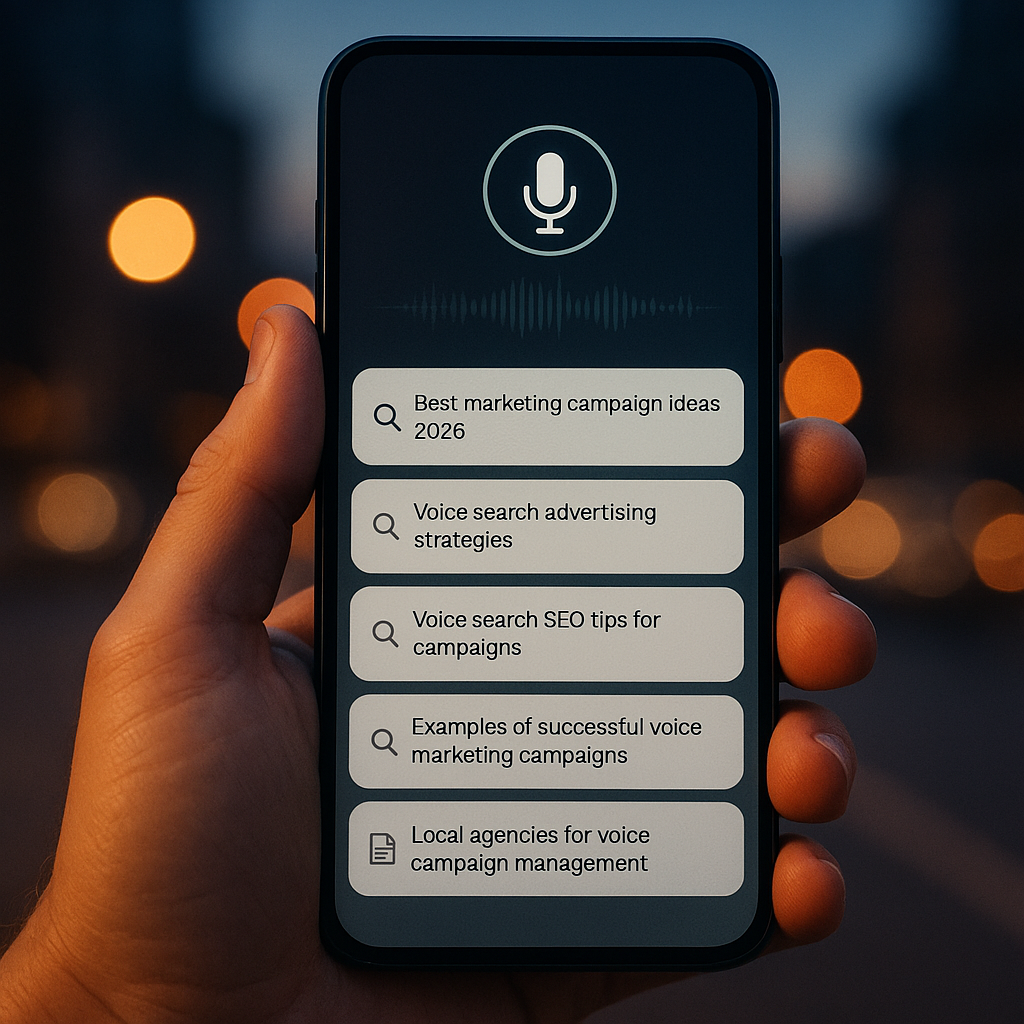
For e-commerce businesses, this means optimising product listings for voice discovery, ensuring your product information is comprehensive and structured, and considering how customers might verbally describe what they’re looking for. Someone might ask Alexa to “order more dog food”—if your brand isn’t the default or doesn’t have strong voice presence, that sale goes elsewhere.
Measuring Voice Search Performance
One of the persistent challenges with voice search is measurement. Google Analytics doesn’t currently segment voice searches from text searches, making it difficult to track performance directly. However, several proxy metrics can provide insights, and measuring ROI in marketing campaigns becomes even more critical as channels proliferate.
Monitor your featured snippet performance in tools like SEMrush or Ahrefs—if you’re capturing more snippets, you’re likely performing better in voice search. Track long-tail, question-based keyword rankings. Analyse “near me” search performance and local pack visibility. Watch for increases in direct traffic, as voice searches often result in users visiting sites directly after hearing the brand name.
Google Search Console can reveal question-based queries driving traffic to your site. Filter for queries beginning with “who”, “what”, “where”, “when”, “why” and “how” to identify voice-related traffic patterns.
Practical Steps to Adapt Your Digital Marketing Campaigns
Transforming your digital marketing strategy for voice search doesn’t require abandoning everything you’re doing—it requires evolution and refinement. Start with these practical steps:
- Conduct voice-specific keyword research using tools that surface question-based queries and long-tail variations relevant to your industry.
- Audit and optimise your Google Business Profile ensuring all information is accurate, complete, and regularly updated, particularly opening hours, contact details, and categories.
- Create FAQ content that directly answers common questions in your sector, structured with proper schema markup to improve featured snippet eligibility.
- Improve site speed by compressing images, minimising code, leveraging browser caching, and using a content delivery network if you serve a broad geographic area.
- Implement structured data markup across your site to help search engines understand your content context and improve rich result eligibility.
- Focus on local SEO by building local citations, earning reviews, and creating location-specific content if you serve particular geographic areas.
- Develop conversational content that reads naturally when spoken aloud and directly addresses user questions and pain points.
- Monitor featured snippet opportunities and optimise existing high-performing content to capture these valuable positions.
The Road Ahead for Voice Technology
Voice search is far from a finished technology. As natural language processing continues to improve and voice assistants become more sophisticated, we’ll likely see even more profound changes in how people interact with search engines and brands.
Voice is increasingly being integrated into other devices—cars, televisions, wearables, and household appliances. The boundaries between voice search, voice commerce, and ambient computing are blurring. Brands that establish strong voice search foundations now will be better positioned to capitalise on these emerging opportunities.
We’re also seeing voice assistants become more proactive, offering suggestions and information before users even ask. This shift from reactive to predictive assistance will create new challenges and opportunities for marketers seeking to reach consumers at the right moment.
Conclusion
Voice search represents more than a technological trend—it’s a fundamental shift in how people seek information, make decisions, and interact with brands. The conversational nature of voice queries, the emphasis on immediate and local answers, and the winner-takes-all dynamics of voice results are reshaping digital marketing campaigns across every sector.
Success in this voice-first environment requires rethinking keyword strategies, creating content that directly answers questions in natural language, prioritising mobile experience and page speed, and ensuring your local presence is impeccable. The businesses thriving in voice search aren’t necessarily those with the biggest budgets—they’re the ones that have adapted their strategies to match changing consumer behaviour.
Whilst voice search won’t entirely replace traditional search methods, its influence will only grow as the technology improves and adoption spreads across demographics and devices. By understanding these changes and implementing voice search optimisation alongside your existing SEO efforts, you can maintain visibility and relevance as this quiet revolution continues to unfold.