

Scroll through Instagram for five minutes and you’ll almost certainly see someone recommending a product. A fitness influencer swears by a particular protein powder. A beauty creator does an unboxing of a skincare set. A tech enthusiast reviews the latest wireless earbuds. These aren’t coincidences — they’re carefully orchestrated marketing decisions, and they work remarkably well. But why do they work? What is it about seeing a person we follow online recommend something that makes us reach for our wallets? This article unpacks the psychology, the data, and the real-world mechanics behind influencer marketing and its powerful effect on consumer purchasing decisions.
The Psychology Behind Influencer-Driven Purchases
To understand why influencer marketing is so effective, you first need to understand how humans make decisions. We are, at our core, deeply social creatures. We look to others — particularly those we admire or trust — for cues about what to buy, eat, wear, and experience. This phenomenon is known as social proof, and it’s one of the most powerful forces in consumer psychology.
Traditional advertising interrupts. A television commercial or a banner ad appears uninvited and attempts to persuade you with polished messaging. Influencer marketing, by contrast, is woven into content you’ve actively chosen to consume. When someone you follow on TikTok or YouTube mentions a product in the middle of a video you’re genuinely enjoying, the context is entirely different. Your guard is lower. Your engagement is higher.
There’s also the concept of parasocial relationships at play. Over time, followers develop a sense of genuine connection with influencers, even though the relationship is entirely one-sided. They know the influencer’s habits, opinions, and personality. They feel, on some level, like they know this person. When that person recommends something, it carries the weight of a friend’s recommendation — not a stranger’s advertisement.
What the Research Actually Shows
The academic and industry evidence supporting influencer marketing’s impact on consumer behaviour is substantial. According to a widely cited report by Influencer Marketing Hub, the influencer marketing industry was valued at approximately $21.1 billion in 2023, up from just $1.7 billion in 2016. That kind of growth doesn’t happen without results.
Research published across platforms like ResearchGate and SSRN consistently finds that influencer credibility, content authenticity, and audience alignment are the three most significant predictors of purchasing intent. In other words, it’s not simply about how many followers an influencer has — it’s about whether their audience trusts them and whether the product fits naturally into the content they produce.
A study examining young consumers (typically defined as those aged 16–34) found that 49% of consumers depend on influencer recommendations when making purchasing decisions. For Gen Z specifically, this number climbs even higher, with many reporting that they trust influencer opinions more than brand advertising or even reviews on retail websites.
Does Influencer Marketing Work Differently for Different Age Groups?
Yes, and quite significantly. Younger consumers — particularly millennials and Gen Z — have grown up in an environment saturated with traditional advertising. They’ve developed a natural scepticism towards overt brand messaging. Influencer marketing, when executed well, bypasses that scepticism because it mimics the kind of peer recommendation that these demographics respond to most naturally.
Older demographics (35–55) are also increasingly influenced by online creators, though the platforms and content styles differ. LinkedIn thought leaders, YouTube reviewers, and podcast hosts tend to carry more weight with professional and middle-aged audiences, whereas Instagram Reels and TikTok creators dominate influence with younger consumers.
The Role of Authenticity and Trust
If there’s one word that underpins the entire influencer marketing ecosystem, it’s authenticity. Audiences are remarkably good at sensing when a recommendation feels forced or purely transactional. The influencers who consistently drive purchasing decisions are those who maintain a perception of genuine enthusiasm for the products they promote.
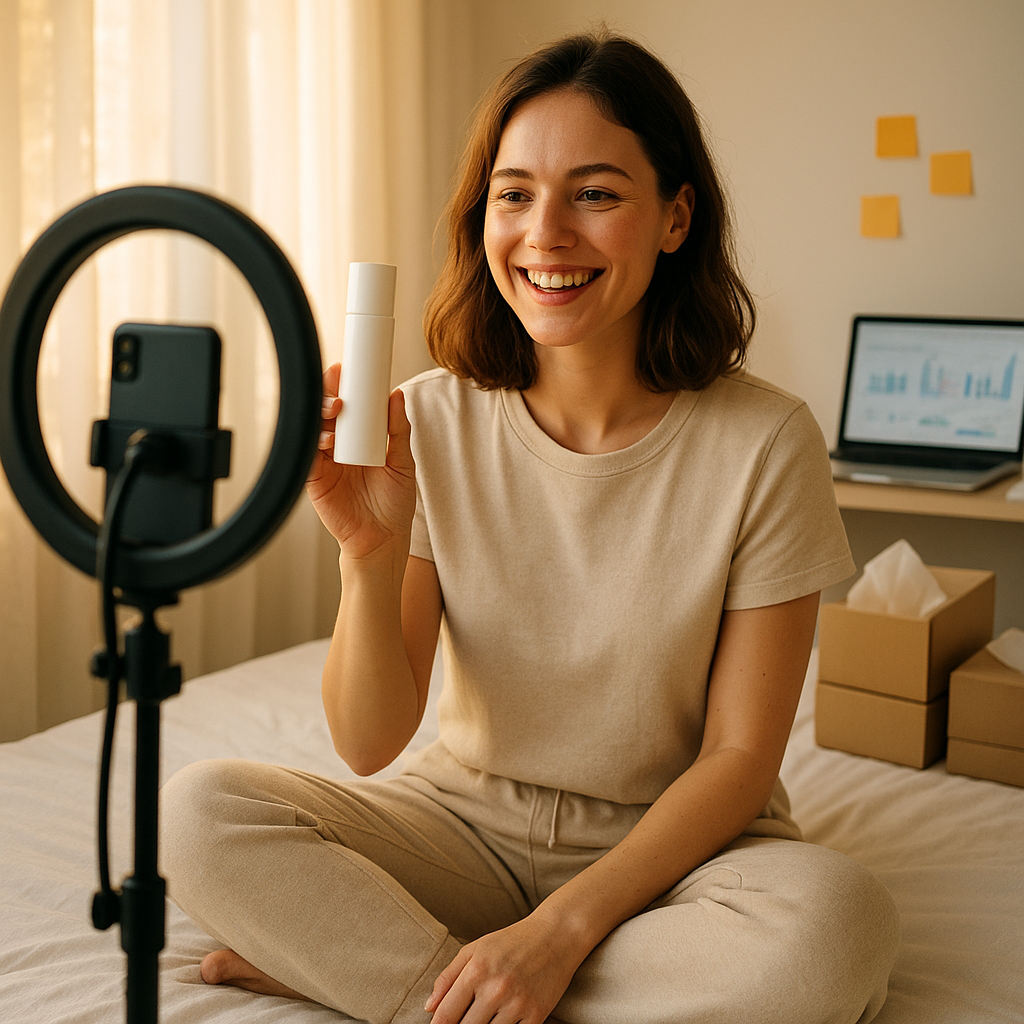
This is why so many brands now prioritise long-term partnerships over one-off sponsored posts. A creator who mentions a brand once feels like an advertisement. A creator who regularly uses and references a brand over months feels like a genuine advocate. The repeated, organic-feeling exposure builds trust — and trust translates directly into conversions.
Transparency also plays a crucial role. Interestingly, research suggests that clear disclosure of paid partnerships doesn’t necessarily reduce a recommendation’s persuasive impact when the influencer has an established relationship with their audience. Followers who trust a creator will often accept sponsored content positively, especially if the product feels like a natural fit for the content they’ve come to expect.
Micro-Influencers vs Macro-Influencers: Who Drives More Purchases?
This is one of the most debated questions in influencer marketing strategy, and the answer is more nuanced than you might expect. Macro-influencers — those with hundreds of thousands or millions of followers — offer scale and broad brand awareness and customer engagement. But micro-influencers (typically defined as those with between 10,000 and 100,000 followers) often outperform them in terms of engagement rates and direct purchasing impact.
Why? Because micro-influencers tend to have highly engaged, niche audiences. Their followers trust them more deeply, interact with their content more frequently, and are more likely to take action based on their recommendations. A beauty micro-influencer with 40,000 dedicated skincare enthusiasts may drive more actual product sales than a celebrity with three million casual followers.
Studies have found that micro-influencers generate up to 60% higher engagement rates than their macro counterparts, and their audiences report feeling a closer personal connection to the creator — which, as we’ve established, is the core driver of purchasing behaviour.
How Platform Choice Shapes Consumer Behaviour
Not all social media platforms drive purchasing decisions in the same way. The platform an influencer operates on significantly shapes how their recommendations are received and acted upon.
- Instagram remains dominant for lifestyle, beauty, fashion, and fitness brands. Its visual nature makes it ideal for product discovery, and features like shoppable posts have shortened the path between recommendation and purchase dramatically.
- TikTok has become a genuine commercial force, particularly for younger consumers. The viral nature of TikTok content means that a single well-placed product mention can lead to a phenomenon sometimes called “TikTok made me buy it” — where products sell out within hours of being featured.
- YouTube drives purchasing decisions particularly well for high-consideration purchases. Long-form review content allows influencers to explain features, demonstrate products in use, and address potential objections — mimicking the in-store experience in a way that short-form content cannot.
- Podcasts are increasingly influential, especially for financial products, wellness supplements, and B2B services. The intimate nature of audio content creates a strong sense of connection, and host-read ads consistently outperform pre-recorded ad spots.
- LinkedIn has emerged as a powerful platform for B2B influencer marketing, where industry experts drive purchasing decisions around software, professional services, and corporate tools.
The Consumer Decision Journey Through an Influencer Lens
Influencer marketing doesn’t just drive impulse purchases. It shapes the entire consumer decision journey, from awareness through to advocacy. Understanding where in this journey influencers have the most impact helps explain why brands invest so heavily in this channel.
Awareness
For many consumers, an influencer is the first touchpoint with a product they eventually buy. They may have never searched for it, never seen a traditional ad for it, and never been recommended it by a friend. An influencer introduces the product into their awareness entirely, creating demand that didn’t previously exist.
Consideration
Once aware, consumers move into a research phase. Here, influencer content — particularly detailed reviews, tutorials, and comparisons — plays a critical role. YouTube unboxings, Instagram Stories with Q&A sessions, and TikTok demonstrations all serve to answer questions a consumer might have before committing to a purchase.
Decision
Discount codes, affiliate links, and limited-time collaborations provide the final nudge at the decision stage. Many influencers negotiate exclusive promo codes with brands, which serve a dual purpose: they incentivise the purchase and allow the brand to track exactly how many conversions came through that specific influencer’s audience.

Post-Purchase and Loyalty
Influencer marketing doesn’t stop at the sale. Creators who continue to discuss and endorse products over time reinforce purchasing decisions and reduce buyer’s remorse. When consumers see their favourite influencer still using and enjoying a product months after the initial recommendation, it validates their own choice and strengthens brand loyalty.
Ethical Considerations and the Limits of Influence
Influencer marketing is not without its complications. Concerns around transparency, disclosure, and misleading claims have prompted regulatory responses in many countries. In the UK, the Advertising Standards Authority (ASA) and the Competition and Markets Authority (CMA) have issued clear guidelines requiring influencers to clearly label paid-for content. Failure to do so can result in significant reputational damage — both for the influencer and the brand.
There’s also the question of over-saturation. As more brands and creators flood the influencer space, audiences are becoming increasingly discerning. Content that feels overly promotional or inauthentic is met with scepticism, unfollows, and sometimes public backlash. The most successful influencer marketing campaigns are those that prioritise genuine alignment between the creator, the content, and the product.
Additionally, whilst influencer marketing can be highly effective, it’s rarely effective in isolation. Brands that see the best results are those that integrate influencer content into a broader marketing strategy — one that includes strong owned channels, consistent brand messaging and consumer perception, and a clear understanding of their target audience’s behaviour across platforms.
Key Factors That Determine Influencer Marketing Effectiveness
Pulling together the research and real-world examples, several factors consistently emerge as critical to whether an influencer marketing campaign actually changes consumer purchasing behaviour:
- Credibility of the influencer — Does the audience trust their opinions in this product category?
- Relevance of the product — Does the product make sense within the context of the creator’s usual content?
- Quality of the content — Is the recommendation delivered in a way that feels natural, informative, or entertaining rather than forced?
- Audience engagement — Are followers actively interacting with the influencer’s content, or are they passive observers?
- Platform alignment — Is the platform the right environment for the type of product being promoted?
- Consistency — Is this a one-off mention or part of an ongoing relationship between the influencer and the brand?
Conclusion
Influencer marketing has fundamentally altered the landscape of consumer decision-making. What was once a relatively niche tactic has grown into one of the most significant forces in modern marketing — and for good reason. By leveraging trust, social proof, and parasocial connection, influencers reach consumers in a way that traditional advertising simply cannot replicate.
The evidence is clear: when the right influencer promotes the right product to the right audience, purchasing intent rises significantly. Micro-influencers drive engagement that punches above their weight. Platform choice shapes the type of purchasing behaviour that follows. And authenticity remains the non-negotiable foundation upon which all effective influencer marketing is built.
As consumers continue to grow more resistant to overt advertising and more reliant on peer and creator recommendations, understanding the mechanics of influencer marketing becomes increasingly valuable — not just for brands, but for consumers who want to better understand the forces shaping their own purchasing decisions.